
With annual revenue topping US$100bn, and headquartered in the southern city of Shenzhen, considered China’s Silicon Valley, Huawei has more than 180,000 employees worldwide, with nearly half of them engaged in research and development. In 2018, the company overtook Apple Inc. as the second largest manufacturer of smartphones in the world behind Samsung Electronics, a milestone that has made Huawei a source of national pride in China.
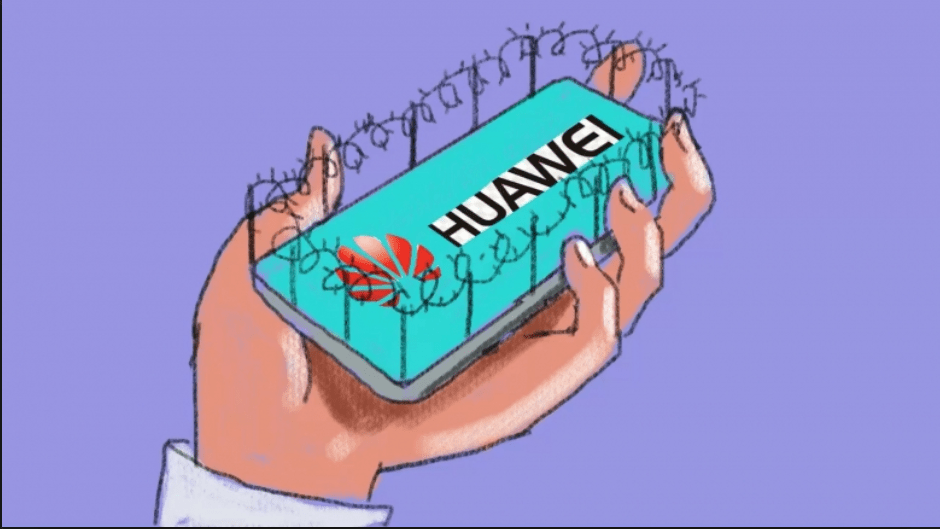
While commercially successful and a dominant player in 5G, or fifth-generation networking technology, Huawei has faced political headwinds and allegations that its equipment includes so-called “back doors” that the US government perceives as a national security threat.
On Sunday, Google suspended Huawei’s access to updates of its Android operating system and chipmakers cut off supplies to the company, after the US government added it to a trade blacklist last week. US authorities are also seeking the extradition of Huawei’s chief financial officer, Meng Wanzhou, to stand trial in the US on fraud charges. Meng is currently under house arrest in Canada, though Huawei maintains the US case against her is purely political.
Despite the current controversies, Huawei says it is determined to lead the global charge toward adopting 5G wireless networks. It has hired experts from foreign rivals, and invested heavily in R&D to patent key technologies to boost Chinese influence.

Photographer Kevin Frayer visited Huawei’s Bantian campus to capture what it is like to work for a company that is never far from the headlines:
Known as China’s Silicon Valley, Shenzhen is a sprawling collection of the country’s most influential technology brands. At the heart of it is Huawei, an industry behemoth in China that is widely scrutinised in the west.

- A garden with ‘Welcome to Huawei’ spelled out in flowers outside at the company’s Bantian campus
The company’s facilities in Shenzhen and nearby Dongguan are massive, even by Chinese standards. Tens of thousands of Huawei employees work between three bases, including a new research and development campus with European-styled buildings designed as a nod to the company founder’s training as an architect.

- Huawei security guards line up at the end of their work day
It is easy to be overwhelmed by the size of it but I was more interested in getting a small glimpse of the real culture of the company. We all have an idea of what we expect a tech giant to look like on the inside, but Huawei was a mystery to me as it was only recently that the company began to invite western journalists to visit.

- A display for facial recognition and artificial intelligence is seen on monitors at the Bantian campus
It is no secret that Huawei is facing big political challenges. Without naming it officially, the US government has issued an effective ban on the company’s telecommunications equipment, despite Huawei being the world’s largest provider of gear at a time when countries across Europe are building 5G, or fifth generation, networks.

- A worker packs new smartphone devices on the production line at Huawei’s campus in Dongguan


- A worker at Huawei’s Cyber Security Lab, and a thermal engineer at work

- Employees sleep in their cubicles in the research and development area after lunch at the Bantian campus
My goal was to get a sense of Huawei’s culture to try to show what it is like to work for the company. Jobs at Huawei are coveted. It is among China’s highest-paying companies for highly-skilled workers and many of its employees have been educated overseas and China’s top schools. The campus boasts fancy dining rooms and villas reserved for courting important clients to subsidised full-course meals at a cathedral-like cafeteria. The campuses are subdivided into blocks, and each of them appears to operate with the sort of efficiency and loyalty that is part of its corporate DNA. Huawei’s founder, Ren Zhengfei, is a former People’s Liberation Army engineer who started the company in 1987 with three staff and the equivalent of £4,000. Last year it posted revenue of $100bn.

- Workers eat subsidised lunch in one of many cafeterias at the Bantian campus.


For Huawei employees, there is low-cost housing, cafes, a library, sports facilities, hotels, shuttle buses, and trams imported from Switzerland. Perks for some include evening activities such as art classes. The lights are dimmed after lunch so office workers can take a nap, a common practice in China. There is even a gardener to feed the Australian black swans roaming, a reminder to employees to look out for economic “black swans,” an unforeseen event with major consequences, and avoid corporate complacency.


In China, Huawei was a source of national pride even before it challenged Apple and Samsung for smartphone supremacy. It is easily the country’s most international company with 180,000 employees worldwide, and celebrity brand ambassadors including actors Scarlett Johansson, Gal Gadot, and footballer Lionel Messi.
The Shenzhen and Dongguan hubs deal mostly with R&D and initial production of phones and equipment. Huawei has hired experts from foreign rivals and invested heavily to patent technologies to boost Chinese influence in the industry.

Like any tech company, Huawei is protective of its intellectual property, so most of the development facilities were off-limits to me, and I could photograph only so much on the production line. They are also sensitive to customer confidentiality, so while the campuses appeared constantly busy with clients, I was asked not to photograph anything that might show them. My visit spanned several days, and overall it was pretty casual and did not appear to be scripted .

One engineer, who went to school in the US, talked a bit about how Huawei is viewed in much of the est. He told me the company is no different than other big tech firms trying to innovate to make life easier.

All Rights Reserved for Tim Bale
 Productivity Hub