

What Happens When People Can’t Afford Democracy Anymore?
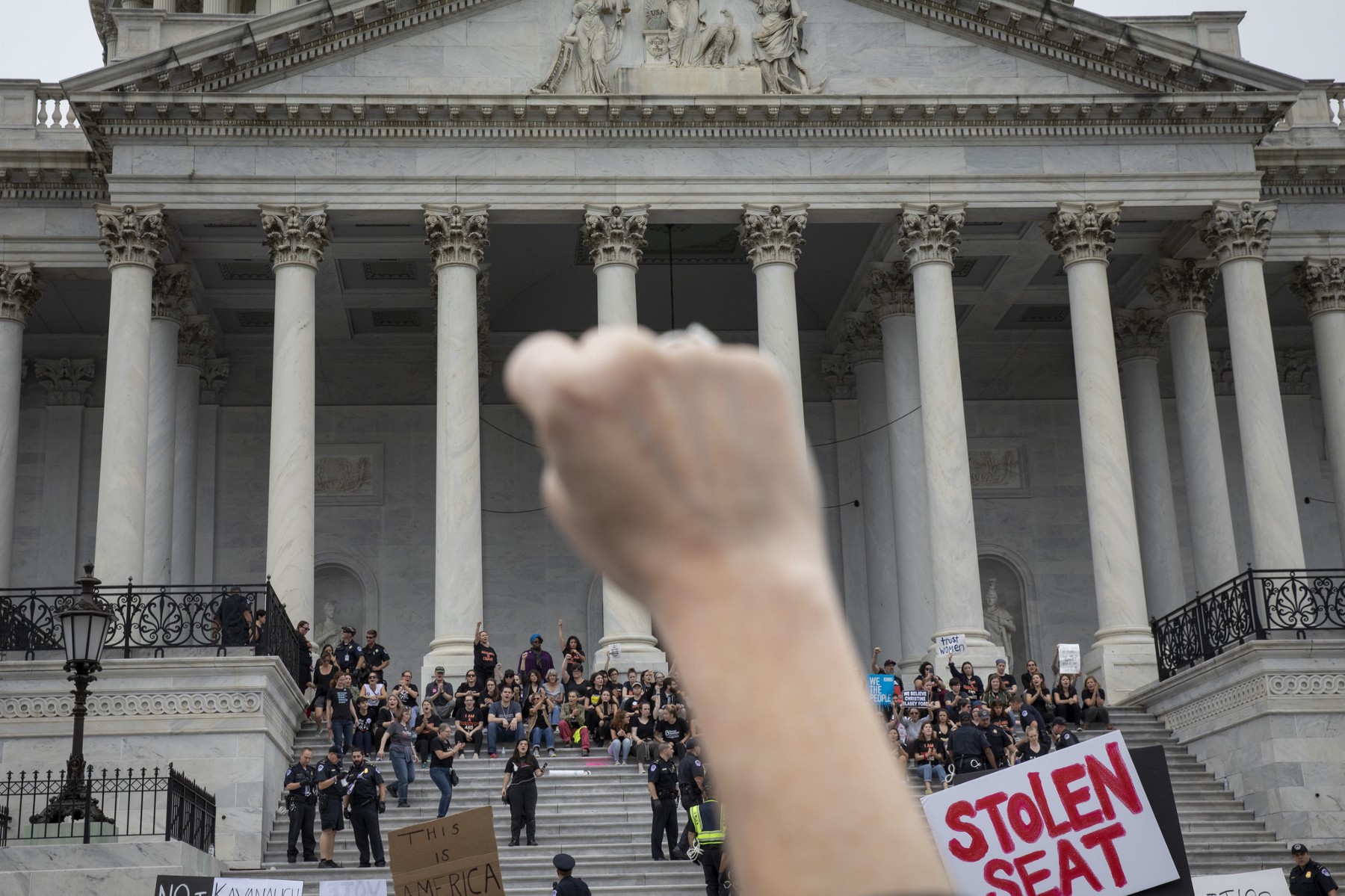
There’s a thought that’s been echoing in head recently: if America began as a new Rome, why are we surprised that it’s ending eerily like the old one?
Now, this is going to be a tough essay to read. You will think I am condemning America(ns). I want to gently say that I wish America only the best, and I’m only crudely, inadequately observing parallels, not rewriting Gibbon — precisely so that such a fall doesn’t become history. So. How did America end up here? Why does American decline resemble Roman decline so strikingly?
After all, the dynamics are eerily similar. A pulsing wave of inadequate leaders, each worse than the last, Dubya, Trump, whomever’s next — Caligula, Nero, Commodus. Peripheral provinces left to collapse. Endless wars never won, fought for no good reason. Economy stagnating. Inequality spiking. Extremism rising. Growing vulnerability, smaller shocks causing ever greater damage. An atmosphere of bitter resignation to it all.
Like wheat, if two things rise the same way, they tend to fall the same way, too. And so to my mind, America’s decline resembles Rome’s decline because America’s rise resembled Rome’s rise, economically, socially, and politically — in turn, because America resembles Rome in the deepest way, in thought. That is no coincidence, of course: the Founding Fathers, its admirers and students, intended America to be a New Rome, shining on the Potomac. Only, I think, they maybe didn’t think hard enough about the problem they were trying to solve: if Rome was a model worth emulating — then wouldn’t a New Rome also be doomed to end in the same way as the old one?
Let’s think about it together, crudely, imperfectly, remembering we only drawing parallels, not performing calculations.
Just as Rome was built atop slavery, so, too America’s original sin was slavery.Far from being ancient history, the residue lingers: blacks are worth almost nil, constantly abused in society, and face limited opportunities. Now, to American leaders, this appears not to matter at all, but slavery, and the presence of its scars, tell us something critical about a society: that a society’s conception of freedom is limited, its social contract is deficient, and the prosperity it enjoys cannot last, depending first of all on misfortune.
A society built upon slavery must then depend upon war, conquest, or servitude to maintain its fortunes, or face up to a costly and difficult period of reconstruction — which never really happened either in Rome — or in America, and that is why America’s social contract remains broken today, depending still on low-cost labour to perform menial jobs via gross abuse and exploitation — like elderly “retirees” living in their cars working seasonally doing warehouse jobs for tech giants. Just like Rome, America never built a working way of life for all, in other words — but democracy, as we will see, cannot flourish that way.
Then there is the constant, pervasive atmosphere of cruelty that defines America — just as it did Rome. Rome had its coliseums and its gladiators and,America has reality TV and no-holds-barred sports. These, too, tell us something about a nation’s ideals, it’s values — which we will come back to.Rome lionized the strong, and scorned the weak , to an extreme degree — just as America does.
The problem is that by scorning the weak, the fundaments of a robust democracy are never built. Rome stopped at aqueducts and fountains, with the occasional morsel of bread. America stopped at guns and free speech. Ademocracy flourishes by expanding public services — in the modern context, by providing healthcare, education, transport, retirements, and so on, which the rest of the rich has done. Why? Because having the basics of life frees people to engage in the difficult, messy, costly, time-consuming business of self-governance. But if they are too busy fighting for existence, how will they govern themselves? In that desperate void, people turn to autocrats, whether triumvirates or Trumps.
Politically, too, Rome and America share parallels. Rome sought to civilize the world, and impose order on it — it’s military conquests turned into an ideological crusade, which, soon enough pushed the boundaries of empire and costs of constant war too far and too high, leaving Romans themselves embittered and impoverished. America, too, has done precisely this: embarked on a crusade against communism, for neoliberalism, capitalism, choose your buzzword, imposing a global order of “free trade”. That should have meant mom-and-pop shops, but turned out somehow to mean massive monopolies instead, because it didn’t include basic rights.
But that very crusade also imploded America’s middle class, impoverished its young and elderly, and thereby engendered a spectacular collapse trust in its own democracy. In these endless wars, the ideological crusade behind them — for Rome, civilization, for America, capitalism — and the terrible costs they imposed, which ultimately led to authoritarianism, lies an eerie parallel.
The effect of these three factors — a deficient social contract, an atmosphere of cruelty, and a crusade to civilize the world — on Rome was catastrophic. In the end, ironically, it didn’t need to worry about the barbarians it had obsessed over — its very own self-limiting beliefs crumbled it from within. The Roman Age came to an end because the Roman Way, its way of thinking about economics, society, and culture, about human possiblity and the point of human life in other words, had failed. Isn’t that, too, what, seems to be happening in America — that its paradigm has failed — for precisely the same three reasons?
And that brings me the truest, most hidden cause of Rome’s failure — at least in my eyes — which is also America’s. How can people engage in the time-consuming, challenging work of democracy if they are growing impoverished — financially, emotionally, culturally, socially — in the first place? Who will give much back to a society that has told it nothing needs to be given, since things are only there to be taken? Perhaps you see the contradiction now, that brought down Rome then, and America now.
Democracy depends on the consent of the governed. The governed can hardly consent to much if they are too busy fighting the world, fighting one another, fighting for existence, and being diverted by spectacles in their few free moments, to numb the pain of it all. Democracy, in the end, is a difficult, costly human endeavour. We must be free enough to pay its costs — which means having the time and energy and education and care to self-govern. Then and only then can we be citizens. Otherwise, we remain mere subjects. That, to me, was Rome’s true lesson — and it is America’s too.
All Rights Reserved for umair haque
 Productivity Hub