


What Happens When You Don’t Get Enough Sleep
Scientists peer inside the sleep-deprived mind and body
A lack of sleep is linked to an incredibly wide range of ailments, from heart disease and Type 2 diabetes to obesity, depression, poor cognitive function, and even Alzheimer’s disease.
Less is known about why exactly poor sleep is so detrimental to physical and mental health. But researchers are zeroing in on the reasons and mechanisms, ranging from blood vessels littered with fatty deposits to a buildup of cellular garbage in the brain.
People who sleep less than seven hours a night have 40 to 60% lower levels of three molecules that are thought to play a key role in blood vessel health, according to a new study published in the journal Experimental Physiology. The molecules, called microRNAs, suppress gene expression of proteins in cells and have previously been linked to inflammation and poor blood vessel health.
“They are like cellular brakes, so if beneficial microRNAs are lacking, that can have a big impact on the health of the cell,” says Christopher DeSouza, a professor of integrative physiology at the University of Colorado Boulder.
DeSouza’s study was small — just 24 men and women ages 44 to 62. And it relied on self-reporting, with the people in the study filling out questionnaires about their sleep habits. Self-reporting is known to be inaccurate, as people can over- or underestimate their own behaviors. But it’s not the first time the researchers observed poor health related to a lack of sleep. In a separate study, DeSouza and colleagues found discouraging health signs in men who sleep just six hours a night. The cells that line their blood vessels were dysfunctional, and their arteries didn’t dilate and constrict as well as men who sleep a longer amount of time.
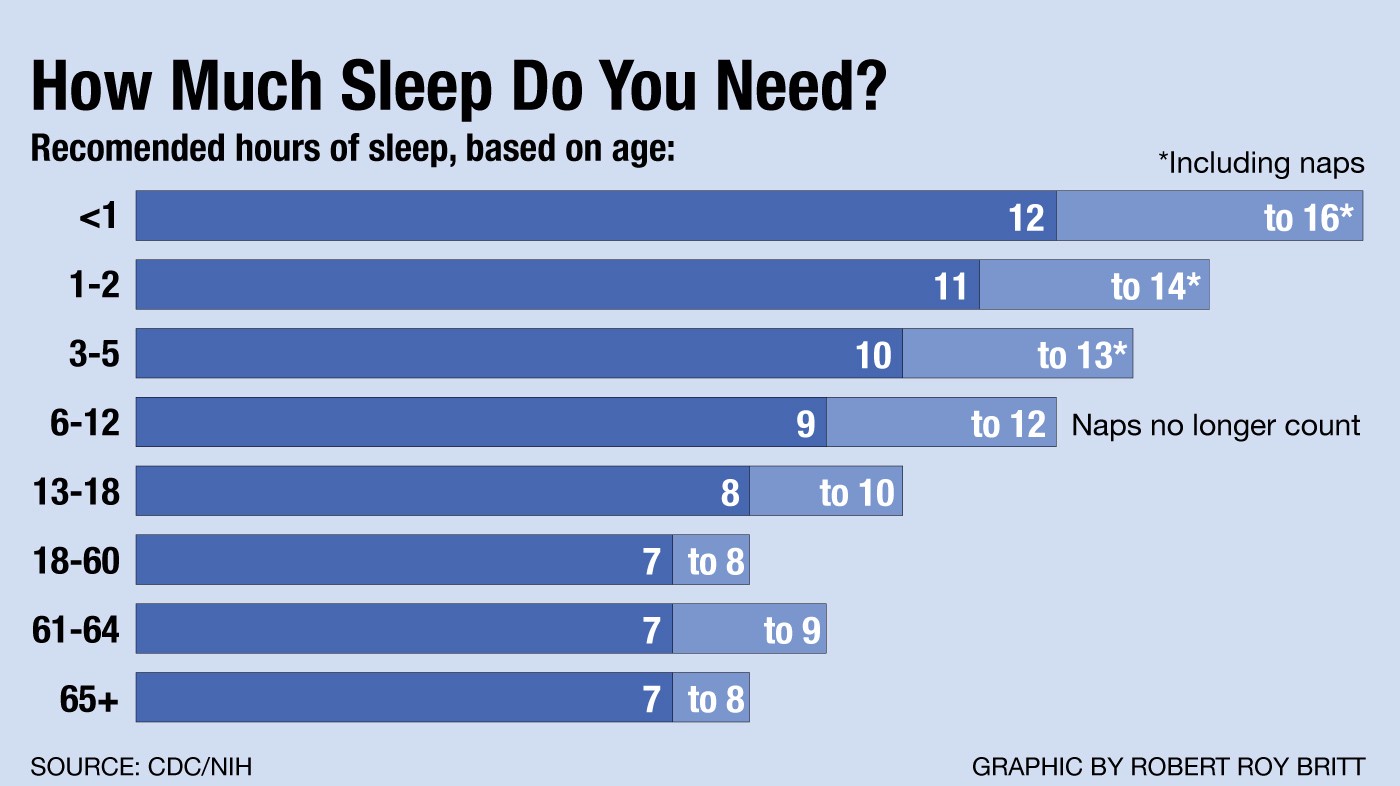
In another, more robust study from earlier this year, a separate research team found that people who sleep less than six hours a night are at a 27% greater risk of having atherosclerosis, or clogged arteries, throughout their bodies, compared with people who get seven or eight hours. Atherosclerosis is the accumulation of fatty deposits, called plaque, in blood vessels that block blood flow and can break off and cause heart attacks or strokes. Likewise, people who tossed and turned and woke up frequently during the night were 34% more likely to have atherosclerosis.
“This is the first study to show that objectively measured sleep is independently associated with atherosclerosis throughout the body, not just in the heart.”
The study, detailed in the Journal of the American College of Cardiology, did not rely on self-reporting. Instead, the scientists actually monitored the sleep of nearly 4,000 people for seven nights, using activity trackers. They did CT scans and used ultrasounds to peer inside the volunteers’ bodies. The men and women in the study were also generally healthy, whereas many sleep studies examine people with sleep apnea or other health problems, says study author José Ordovás, a Spanish researcher who also works at the USDA Human Nutrition Research Center on Aging at Tufts University.
“This is the first study to show that objectively measured sleep is independently associated with atherosclerosis throughout the body, not just in the heart,” Ordovás says. “We have to include sleep as one of the weapons we use to fight heart disease.”
Scientists are also looking inside the brain to gain a better understanding of what happens when people don’t get enough sleep.
It’s well established that the brain consolidates memories during sleep. But more recently, scientists are realizing that sleep also helps the brain dispose of waste. Previously, scientists believed the brain recycled its waste. But an alternative view has emerged over the past few years, and the latest thinking is that degenerative diseases of the mind are the result of a “dirty brain.”
Here’s what’s going on: The human body is not perfect. Amid all the complex workings of the brain, tiny molecules called proteins are constantly folding into certain shapes that allow them to carry out various jobs, from providing structure to triggering cell division. But some proteins get misfolded and are left to do harm, researchers explained in a study published last year in the Proceedings of the National Academy of Sciences. These junk proteins become more common as we age, and they are associated with Alzheimer’s disease. But they develop in otherwise healthy people, too.
“The brain disposes of its waste via the glymphatic system, which is thought to consist of a network of vessels that runs alongside blood vessels in the scalp and drains waste-filled cerebrospinal fluid from the organ,” the researchers explain. Their study indicates the brain’s garbage collectors work best when people sleep, hauling away a protein called amyloid beta, among other trash.
The research “provides preliminary evidence that a single night of sleep deprivation could result in increases in the levels of amyloid beta in some of the brain regions that are affected by Alzheimer’s disease,” says study lead author Ehsan Shokri Kojori of the National Institutes of Health. “While we did not show whether such changes are a result of overproduction or lack of clearance of amyloid beta, the findings supported that lack of sleep could disrupt the balance between production and clearance of amyloid beta in the brain.”
Researchers are also getting a glimpse of what happens in the brain when lack of sleep interferes with routine activities like driving. Brain scans of sleep-deprived epilepsy patients demonstrate that as they become sleepy, their brain cells actually slow down, disrupting their ability “to encode information and translate visual input into conscious thought,” scientists at UCLA and Tel Aviv University found in a study published in the journal Nature Medicine.
“We discovered that starving the body of sleep also robs neurons of the ability to function properly,” says UCLA researcher Itzhak Fried, the study’s lead author. “Severe fatigue exerts a similar influence on the brain to drinking too much.”
The same phenomenon could make a healthy but sleep-deprived person fail to react quickly to, say, a pedestrian stepping in front of his car, the scientists speculate. “The very act of seeing the pedestrian slows down in the driver’s over-tired brain,” says study team member Yuval Nir of Tel Aviv University. “It takes longer for his brain to register what he’s perceiving.”
Still, there is much yet to learn about how the brain is nurtured by sleep or damaged by the lack of it. Lack of deep sleep in particular — the stage during which the brain is the least responsive to external stimuli — has been linked to both increased levels of amyloid beta and tau, another marker of Alzheimer’s disease, Kojori says.
“With recent advances in brain imaging, researchers have been evaluating the effects of sleep on many markers of neurodegenerative disorders,” he says. “Integrating the many biological processes that are affected by poor sleep will be a challenge for future work to better characterize the contribution of sleep to neurodegenerative disorders.”
All Rights Reserved for Robert Roy Britt
 Productivity Hub