
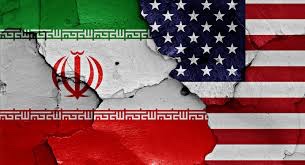
The Trump administration is doing whatever it can to justify war with Iran
Trump administration is marching toward war with Iran on the back of exaggerated or cooked intelligence — and we should all be terrified.
The latest escalations started a few weeks ago, when Trump’s national security advisor, and longtime Iran hawk, John Bolton issued an inflammatory statementsaying that the U.S. would be sending a carrier strike group and bomber task force to the Middle East in response to an unnamed “number of troubling and escalatory indications and warnings” from Iran.
Almost immediately, there were reports that the claims were wildly exaggerated. The Daily Beast cited “multiple sources close to the situation” in reporting that “the administration blew it out of proportion, characterizing the threat as more significant than it actually was.”
“We’re sending a message with this reaction to the intelligence,” one official told the Daily Beast, “even though the threat might not be as imminent as portrayed.”
That was just the beginning. The Trump administration then claimed, last week, that Iran has been escalating confrontations with the United States through its proxy forces in Iraq; in response, the U.S. pulled all of its nonessential State Department personnel from the country. (For reference, the U.S. did not do this when ISIS was threatening to reach Baghdad in 2014.) Again, the move was also immediately called into question. Most notably, British Major General Chris Ghika, second-in-command of the anti-ISIS coalition in Iraq, flatly rejected the Trump administration’s claims: “No, there has been no increased threat from Iranian-backed forces in Iraq and Syria.”
Things came to a head late last week, when the Wall Street Journal reported that U.S. intelligence concluded any actions taken by Iran were, in fact, in reaction to inflammatory moves by the U.S. — a far cry from the Iran-as-aggressor narrative Bolton is trying to spin.
As these tensions mounted over the past few weeks, the Pentagon was busy presenting plans to the White House for “an updated military plan that envisions sending as many as 120,000 troops to the Middle East should Iran attack American forces or accelerate work on nuclear weapons,” according to the New York Times. (There is, by the way, no evidence Iran has been building toward nuclear weapons).
It took less than a day for reports to emerge that the whole plan is being manufactured around inflated or fabricated threats to U.S. interests. The New York Times quoted an anonymous U.S. official who called the intel around Iran “small stuff,” and said it didn’t warrant the level of attention being paid to it by the White House.
It was the source’s next reported statement, though, that was the most ominous. The unnamed official went on to say, according to the New York Times, “the ultimate goal” of the crippling sanctions the U.S. has instituted on Iran in the past year “was to draw Iran into an armed conflict with the United States.”
History may be on the verge of repeating itself.
The Trump administration has been building to this moment since it first assumed control of the White House.
Early in his administration, Trump infamously pulled the United States out of the Iran nuclear deal negotiated under the Obama administration and implemented new sanctions, despite the fact that Iran had fully complied with the deal’s terms. Back in June 2017, White House officials were pushing for a broader war in Syria “viewing it as an opportunity to confront Iran and its proxy forces on the ground there,” reported Foreign Policy.
Around the same time, the New York Timesreported that the Trump administration was directing the CIA to take a more aggressive stance on Iran. According to the New York Times, the White House’s liaison to intelligence agencies “told other administration officials that he wants to use American spies to help oust the Iranian government.” There were even reports that then-Secretary of Defense James Mattis was floating a plan to have the U.S. military board Iranian ships to look for weapons potentially headed to Yemen — a move that would have amounted to an act of war. The plan was scuttled only because it was leaked to the press.
Much like the George W. Bush administration, which had long harbored ambitions to attack Iraq before the invasion in 2003, the Trump White House has, for years, been looking for an excuse to engage in a standoff with Iran. Trump has surrounded himself with neoconservative national security advisors who have been itching to attack Iran for over a decade
After two weeks of his White House beating the war drums, and potentially seeing the public backlash, it seems Trump himself may now be more hesitant to engage in all out war. Yet, at the same time, he reportedly is now questioning his advisers — he told reporters earlier this week that if he does go to war, it’ll be “a hell of a lot more troops” than 120,000.
The eerie parallels to the last two calamitous wars in Iraq and Vietnam — where misleading claims about intelligence and outright lies led Congress to approve generational conflicts — could not be more clear. It will be up to the press to view everything that comes out of the White House through an extremely skeptical lens. In both Iraq and Vietnam, uncritical reporting of official U.S. statements led to incalculable death and destruction. If we don’t learn from those lessons, history may be on the verge of repeating itself.
All Rights reserved for trevor.timm
 Productivity Hub