
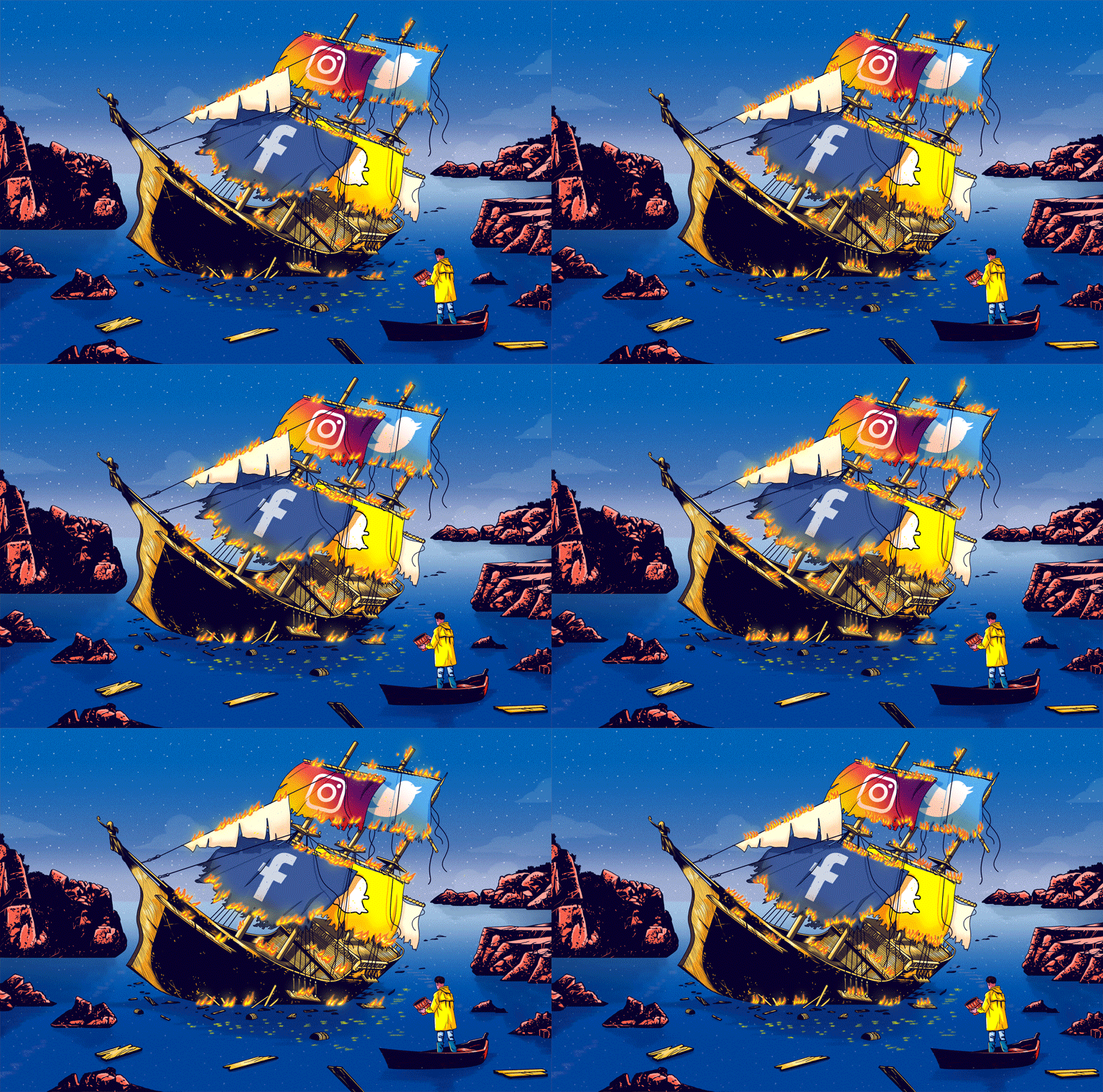
A brief history of an industry that barely existed a decade ago
I remember a time when our activities didn’t come with a share button. I remember when the President didn’t dictate with Tweets, and when filters only existed in Photoshop. I also remember when that changed.
Almost as quickly as social media materialized, it was denounced as a distraction to school kids, a sucker of data plans, and a waste of everyone’s time. Dramatic headlines took over the Op-Ed section of newspapers everywhere, blaming social media forhectic neighborhood parties and Gen-Y’s incompetent spelling. We were fed the rhetoric that social media was a time-waster only enjoyed by hopeless millennials, and just like us, it would never amount to a thing.
Though now, we can see how this technology has fundamentally changed the way we interact. It’s connecting families, catalyzing revolutions, and electing leaders — and it’s integrated itself into everything we do.
A Bit About Me
Six years after first live-tweeting a panel discussion in a Melbourne library, I found myself managing social media content for brands across the globe. I’ve lost count of the times my career legitimacy has been questioned, I’ve spent hours convincing decision makers that social is a worthy investment, and thankfully, I can count the number of published typos on one hand.
As I reflect on this decade of social media, I can appreciate how it’s nestled itself into almost every corner of our lives. Here is my account of this explosive and underestimated technology, from the perspective of someone who has grown up with it, lived with it, and worked with it for over ten years.
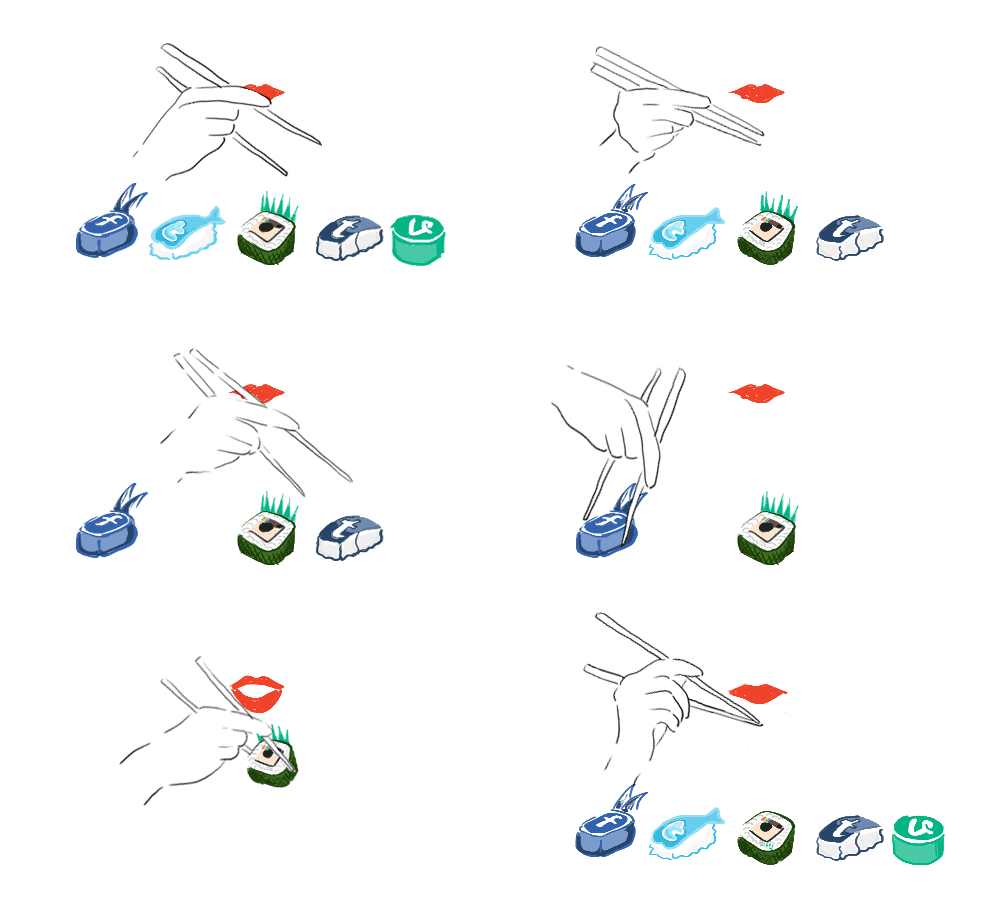
2005 — Social Butterflies
The 21st century was young, and the concept of social media was emerging — primarily in the form of MySpace pages and messaging platforms. A little thing called The Facebook was sweeping through university networks across the world, though it would still be some time before Facebook was accessible by my peers. For us, top friends were a contentious issue and profile songs defined our teenage identities. Emo hair confused the world. Lance Armstrong was a respected athlete. And most notably, YouTube was launched.
In 2005 the term “social media” had barely made a peep — back then it was “entertainment”, and no one suspected there would ever be someone employed to manage it. Some brands were dabbling with MySpace pages, yet most were still delivering their messages across TV commercials and magazine spreads, unsuspecting of the change about to happen.
Could we have predicted the changes about to take place? Doubtful. What could we expect when our Internet connection was limited to desktop machines in communal spaces? The internet was not optimized for the phones in our pockets and it was not designed for instant access.
We had no idea what was coming.
2008 — The Beginning of #Social
2008 was a pivotal year. As the Obama era began and financial markets were thrown into turmoil, Facebook hit 100million active users and gave us the like button. The world began Tweeting, but Twitter’s 140 character limit was criticized as useless and noisy. We were confused by hashtags, then saw them creep into our daily vocabulary. Unfortunately, unironic usage of #blessed would soon be upon us.
Brand presence on social media was largely limited to those who were adventurous enough to invest in Facebook’s young advertising platform. Digital marketing was growing, but social media was still regarded by most companies as a periphery platform — only something for those with the lucrative marketing budgets to experiment with.
In 2008, social media was like an excited high school grad — bright-eyed and full of hope, not taken seriously, but determined to change the world. Social media was still social at heart — we poked our friends and followed celebrities we admired. We witnessed the President tweet intelligence to the world. Online news wasn’t fake news, and profiles looked like this:
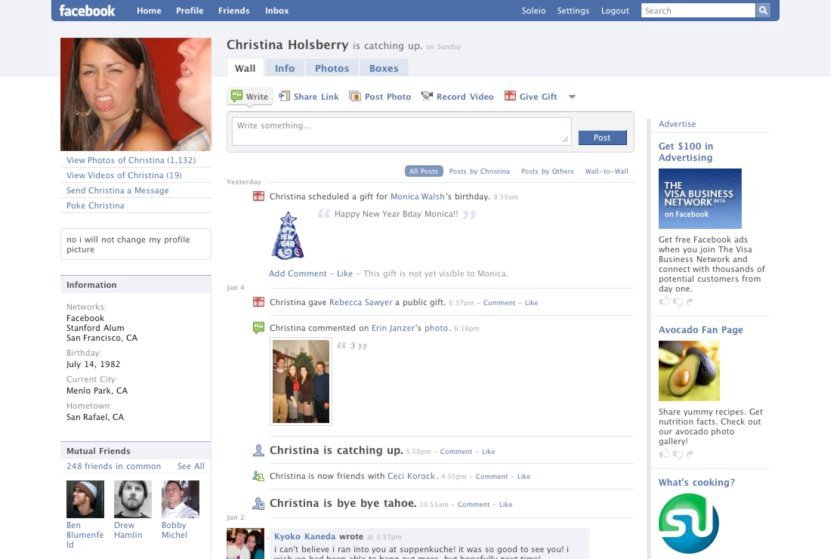
Reminisce for a moment. This was the Facebook not yet scathed by data leaks and political manipulation. Wasn’t it cute? I remember once updating my status to Madeline Snow is eating sushi. Somehow, I thought that was information my friends wanted to know. The sushi probably wasn’t anything special, but the sharing of mundane details was how we did things back then.
2010 — Social Ladders
By 2010, social media was evolving fast as Instagram and Pinterest pioneered a focus on curation instead of conversation. The popularity of these platforms also meant photography was never the same again, much to the heartbreak of traditional photographers everywhere (I blame Instagram’s Kelvin Filter for that. Gross.) Weddings were suddenly inspired by Pinterest Boards instead of bridal magazines, and Instagram accounts would soon be influencing high-brow art collections — indicating these platforms were having a significant impact on cultural norms.
A Throwback
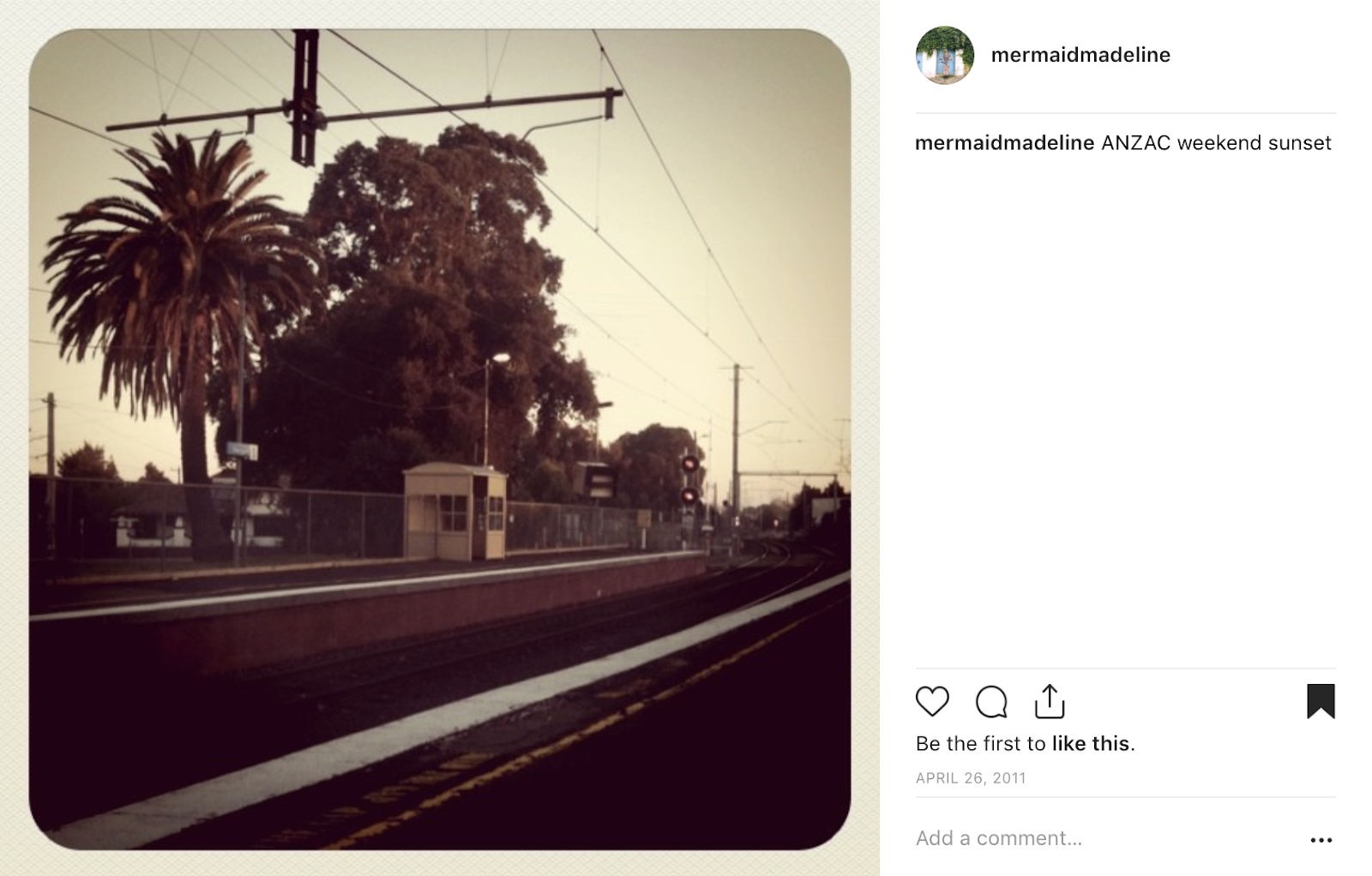
Does anyone remember Hipstamatic? It was one of the original photo filtering apps. One day I tried to download it but accidentally downloaded Instagram instead. Behold, my very first ‘gram was published minutes later. See below for my creative genius circa 2011. I didn’t even use a hashtag. Seriously bold move on my behalf.
By 2010, most people were on social but sponsored ads hadn’t yet permeated our newsfeeds. Facebook released their first-ever mobile app, and customers could “become a fan” of a brand they loved — thus launching Facebook as a core advertising tool for businesses. Gradually, we saw social media finding its place in our pockets and quickly becoming an extension of ourselves, rather than just an app on our devices.
2012 — Social Warriors
2012 was supposed to be the end of the world. But as we styled our tin-foil hats in preparation for the pending Armageddon, the Arab Spring and Kony 2012 erupted across the world. Occupy Wall Street had also ignited protest in late 2011, and we started to witness social media becoming a political tool as well as a social one. For better or worse, activism was happening online, catalyzing social protest in a way we’d never seen.
In 2012 it was easy to criticize most online activism as a passive excuse for social protest. “Like to Support” campaigns filled our newsfeeds, and Facebook users changed their profile pictures in support of social causes without asking what should happen next. The search term “slacktivism”, unsurprisingly, saw a spike during the Kony 2012 frenzy.
The optimist in me wanted to believe social media could become an overwhelmingly positive tool for social change. Despite the flawed foundations of Kony2012, I witnessed it mobilizing people quickly and passionately. This gave me hope for the future of activism — but this feeling changed significantly in 2016.
2012 was also the year Facebook reached 1 billion users. Brands were no longer asking “should I set up a Facebook page?”, but instead asking, “how do I do this successfully?”. The Facebook algorithm was a regular conversation topic around the marketing department’s water cooler, and organic content was still a viable advertising option (RIP organic marketing, we miss you dearly.) Page followers and post likes were the aim of the game, meaning success on these platforms was easy to measure and publicly visible. It was a simpler time.
Social Media Managers like myself had an official job title by this time, and budgets were allowing for meaningful investment on these platforms. This led to the growing collection of social media fails on behalf of brands who hadn’t yet buttoned up their approval process. The term “viral marketing” was also, regrettably, thrown around meeting rooms with furor.The most shared Tweet from 2012.
2015 — Social Hype
By 2015, social media was at the center of so many things we consumed. Tweets were considered a credible news source and content was delivered via click-bait headlines and useless listicles. Also around this time, passive networking emerged, meaning users shared less personal information on public feeds (much like my fascinating sushi update from 2009), and instead connected with people via articles, videos, and memes.
Also in 2015: The US election result was just speculation over the dinner table, and this was one of the most popular Tweets of the year.
A Blast from the Past
Does anyone remember Meerkat? It launched with a bang at SXSW’15, and was predicted to follow Twitter and Foursquare into Silicon Valley greatness. Then literally three months later, our attention spans were directed to something else shiny, and Meerkat was just another icon taking up space on our screens.
The lesson from Meerkat’s SXSW fanfare was that social media’s place in our lives was maturing. Many new platforms were either being acquired by the tech giants (Whatsapp), replicated by the tech giants (Instagram Stories & Snapchat), or simply not providing any significant, long-term benefit to users (Meerkat, Vine). With the tech elite solidifying their real estate on our devices, there was extremely limited space for another platform to successfully integrate itself into our routines. It was no longer enough to be social; successful platforms needed to put themselves at the core of everything we do.
In Marketing Teams
Folks were realizing social media users were no longer just hip millennials. Social audiences became fragmented as younger users were no longer interested in using the platforms their parents had infiltrated. And who’s to blame them?
Social media was now accepted as a pillar of most marketing departments. We hotly debated emoji placements and #hashtag choices in creative briefings, because these seemingly meaningless elements were actually becoming kind of important. Most businesses had a Facebook page to like and an Instagram account to follow — even my neighborhood plumber Ken had his Instagram handle plastered across his van. (See, even Plumber Ken had figured out acquisition marketing. Nice one Ken.)
As social advertising platforms matured, social managers’ work also became more technical. Content was driven by data, and online audiences became a favored testing bed for new ideas — meaning social media managers were also becoming analysts and strategists. To say we wore many hats during this time would be an understatement. We wore all kinds of hats. We also had a sweet hatstand. It was a curious and hectic time to be a part of the content marketing world.
2019 — The (Social) Butterfly Effect
In 2019, most of our interactions are social in one way or another — whether it be speaking with friends, finding new dates, consuming news, redecorating homes, or training for marathons. If someone had told me in 2005 this was where MySpace and messaging platforms were headed, I would have tightly clutched my blue iPod mini, turned The Killers up high, and not believed a word.
Finally, brands have begun acknowledging the fact their devices demand too much of our attention, and the damaging reality of social media has now been realized. Thanks to Russian hackers, Cambridge Analytica, the 2016 election (amongst other betrayals of our trust,) tech is no longer seen as an agnostic tool incapable of altering our habits, and social media is no longer a singular experience limited to our devices. They’re now treated as tools that hijack our attention and turn it into revenue — and it’s about time.
If there is any silver lining to the Cambridge Analytica disaster, it’s that more attention is being paid to the quality of our newsfeeds and the impact they have on us as humans. Mark Zuckerberg even announced in January of 2018, a change to newsfeeds that could reduce our time spent on Facebook, but improve the quality of that time. Considering our newsfeeds have been a frenzy of click-bait and misinformation in recent years, this is kind of a big deal.
For Marketing Teams
Online media is an entirely different beast to the one we were managing even just a few years ago. Marketing departments no longer have a monopoly on social media, as the function of social has extended beyond marketing teams to community, partnership, and customer service teams. Those with keys to the social kingdom could be managing an integrated brand launch, engaging an online community, creating content, or optimizing bid strategies. This means social media is also now the default outlet for branded content and customer interactions.
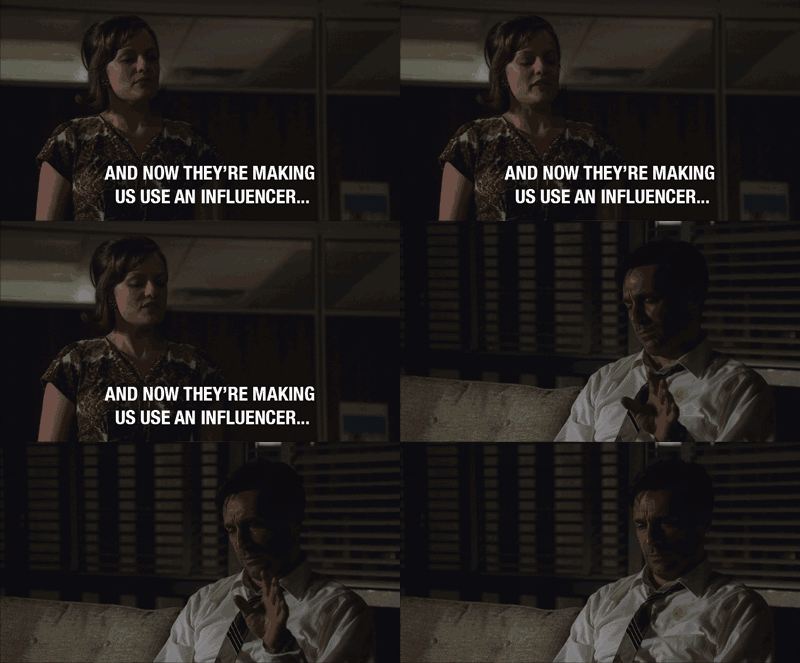
But as algorithms change and feeds become regulated, branded content is struggling to get in front of as many eyeballs as it used to. Organic reach has plummeted across most platforms, and budgets previously allocated to primetime commercials are instead paying social media superstars to promote their products via Influencer Marketing. When executed well, this approach can develop hyper-engaged communities and increase loyalty with an amazing return on investment. But this approach also means advertising now underpins so much of the content we see, even if it appears to be organic or unsponsored.
What could be next?
I have a few predictions for which direction social media and online advertising could take in the coming years.
Our news feed will change. A lot.
Possibly a bold claim — but the feed in which we know it (specifically Facebook’s feed) could look completely different in just a few years time. We’re understanding more about how people, especially Gen-Zers, only seek out Facebook for specific functions, like groups and events– instead of going straight to the feed to discover content. This is compounded by the fact that feeds are already saturated with advertising and manipulated by algorithms. They’re losing the impact they once had, and it’s likely advertising models will have a lot of catching up to do.
We’ll start to consume better, smarter, content.
This conversation has already started. As algorithms favor quality interactions over meaningless ones, the standard of advertising will need to increase in order to cut through the noise. Content is infinite, but the time we have to consume it is not. It will need to become more relevant and meaningful to us if it’s to compete with the interactions that are most important to us — yet also avoid crossing the line into so-relevant-it’s-creepy territory. It’s a balancing act.
We’ll fully understand why something works.
Good content and relevant advertising can only happen when we understand why something is successful, via robust and detailed data. There continue to be black holes in many reporting frameworks, especially when multiple devices get involved and multiple clicks aren’t considered in consumer journeys. But as those black holes get filled, we can gain a deeper understanding as to who interacts with what content, when they interact with it, and how this content can be made better.
AR? VR? 🤷♀️I can’t say I’ve invested much thought into augmented or virtual reality, but it frequently appears in conversations detailing the future of digital communication. Sometimes I think we’re only a few years off some reality-altering tech making its way onto all our devices (not including Snapchat’s Puppydog filter), but then I remember that hot second when Google Glass was a thing, squirm slightly, and move onto something else.
To Conclude…
Haters gonna hate, but social media clearly isn’t going anywhere. Technology will always be evolving to connect people in better and faster ways, and the business world will always be sending their message to where the people are. As these platforms mature, we could see business producing more content that’s relevant and useful, instead of contributing to the spam-fest we’ve become so accustomed to.
However the Wild West days for social media are ending, and these virtual worlds are becoming regulated as we figure out how to avoid disasters of the 2016 variety. The kids who developed these platforms in basements across America, are now adults being held accountable for the power they yield. The full impact of social media is being realized, and there’s a degree of mindfulness developing around the way we engage (or disengage) with these platforms.
I recognize these observations are made through a lens of optimism — there’s every chance that we don’t learn from mistakes we make, or that a tweet sparks a nuclear war, or that our networks become a corrupted monopoly, controlling all information we consume. We get things wrong, but we also get a lot of things right. I’m putting my money on social media as a force for good, and I look forward to reassessing our prospect in five years time.
All Rights Reserved for Madeline Snow
 Productivity Hub