
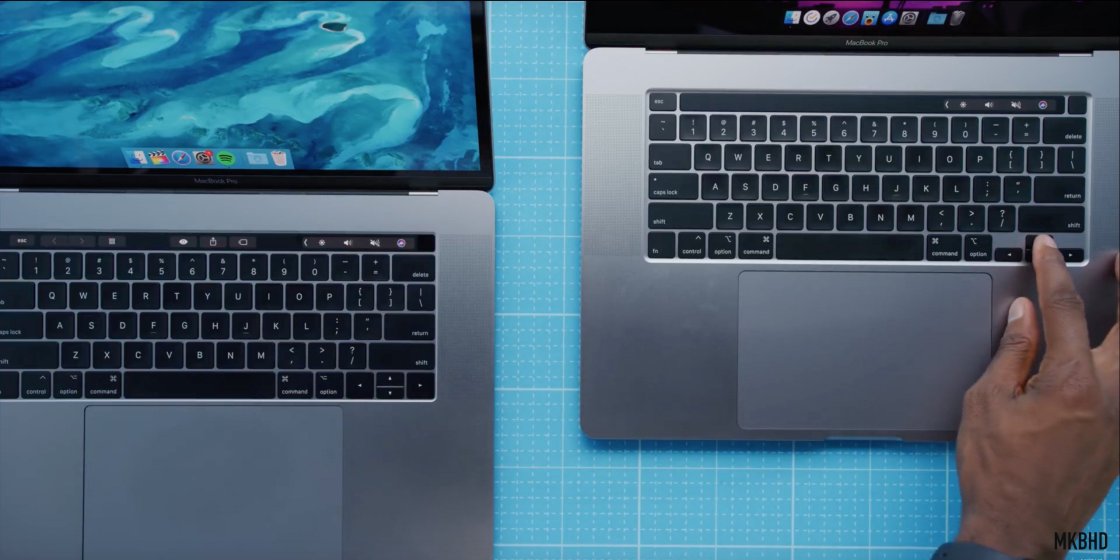
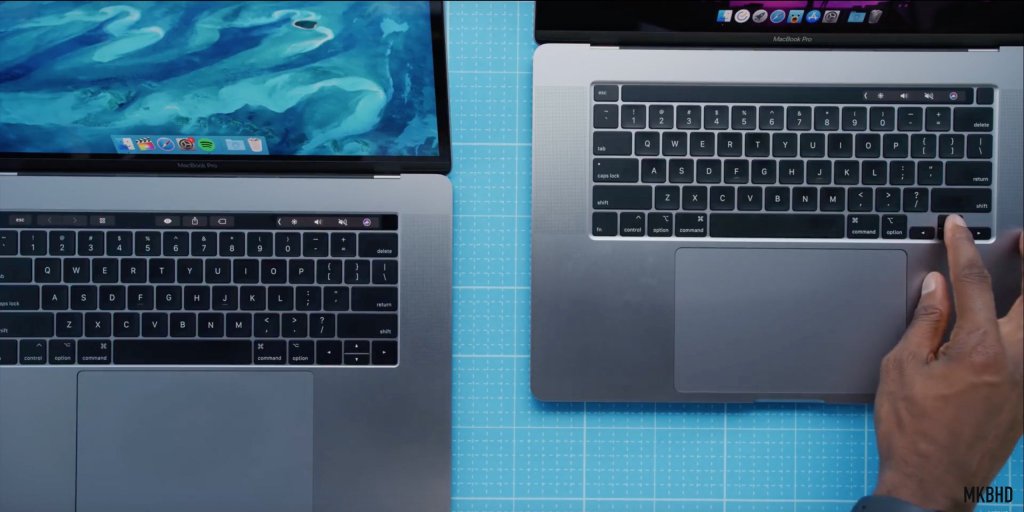
First, the scissor. Then, the butterfly. Now, Magic.
It’s been about two weeks now since the MacBook’s Magic keyboard made its way into the line. Even before a lot of customers got their hands on it, the keyboard has garnered a lot of fans. Why? — because Apple has finally recognised that they’ve messed up and decided to switch back from the Butterly mechanism to the tried and tested Scissor switch mechanism.
To really understand how and why Magic Keyboard appeared magically, we need to look at a design story behind the keyboard design in the past few years.
Why was the Apple Butterfly Keyboard created in the first place?

The Butterfly mechanism was initially designed to actually improve the user’s typing experience. The intention was in the right place. The execution was what was flawed. The Butterfly Mechanism made its debut with the refreshed Apple MacBook in 2015 — the successor to the famous all-plastic white one they had many years earlier.
The 2015 Apple MacBook was designed to be ultra-thin, and sleek. The Butterfly mechanism made the keyboard thinner thereby enabling the laptop to be a few millimetres thinner than the previous designs. A few millimetres is big deal for Apple and in the tech world at large. This would be one of the many reasons why the Butterfly Mechanism was created.
Besides this,
- They wanted to make a keyboard which was quieter — the scissor mechanism had a little bit of clunky sound to it (Which isn’t that much of a problem really! People really like the keyboard clicks. Even the Apple Settings app on their iPhone offers keyboard clicks sound as an option.)
- They wanted to add additional stability to the keys— a rather non-common problem but they wanted to ensure that the key pressed at any point on the surface would activate the key. If you press at the corners of your traditional keyboard, you’ll see it doesn’t press the key at many times. (Most people are used to this, and it doesn’t really affect the user’s typing as much as Apple claimed it did.)
The resulting design
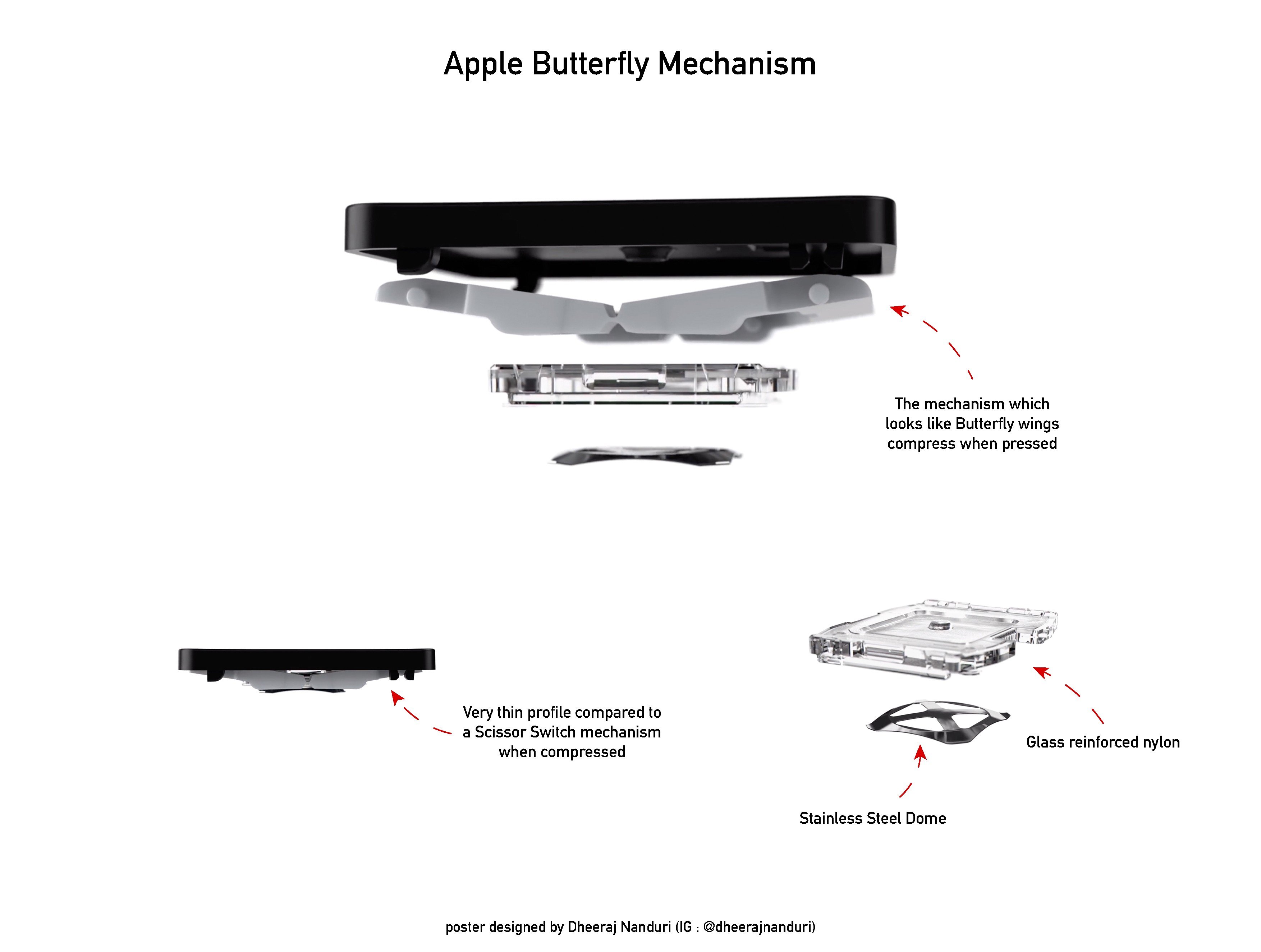
This mechanism was born out of their goals to be Quieter, more Stable and Thinner. From an engineering perspective, this level of thinking was considered impressive during its launch and it was ostentatiously promoted by Jony Ive extensively in the launch videos — a lot of talk and fancy words about rethinking how a keyboard works.
Butterfly Mechanism in comparison to the traditional Scissor Switch mechanism

The advantages of the Butterfly Mechanism are quite obvious when you see the diagram.
- A Glass-filled nylon — which meant more sturdiness and durability
- A single assembly — which meant more stability
- A stainless dome design compared to a silicone one — adding longer life
- One more aspect is the cost itself, since this is a single assembly mechanism, the cost of the keyboard also comes down.
Not to mention the humongous PR Apple can do with the whole new keyboard
However, these seeming advantages never really worked and the failure can be grouped under two aspects — the User Experience and Design.
Where did it fail in User Experience?
The keyboard, despite the many advantages listed above, created a disastrous experience for the users. This ended up with Apple creating a world-wide free Keyboard replacement program — which now costs them dearly.
The three major experience problems for the users were:
- The Butterfly keyboard almost had zero key travel — which influences one of the most significant aspects of design, Feedback, there was no feedback from the keyboard and people really began to hate it.
- It was quiet only if you wanted it to be — an extension from the above point, people began getting slightly violent with the keyboard which caused them to type with more pressure, thereby being louder than even their normal keyboards. (Talk about irony!)
- It didn’t sound great — this was a common complaint, the sound of the keyboard wasn’t like something being pressed, but rather something being tapped or hit. This frustrated many.
Where did the Design fail?
There are two big reasons for this across the internet.
- The keys accumulated dust under it — The keyboard accumulates dust over time and due to the extremely thin gap that is present, the debris used to get accumulated and this caused the keys to get stuck. Ultimately rendering the key useless. While there’s no exact reason pointed out, the V shape of the Butterfly tends to get more disturbed with debris due to its wider structure than the X that comes in the Scissor Mechanism.
- The materials couldn’t withstand the heat — While this is a slightly more scientific reason, it is a theory that the plastic and the membrane present under the key become structurally weak over time with heat from the CPU. The heat exposure to the plastic was quite high too because of the extremely thin nature of the laptops.
The other design challenge was lack of serviceability to the keyboard. Apple has made, cleaning this keyboard quite hard and replacing it, a nightmare for itself. This led to keyboards having to be replaced wholly even if a single key failed. Thus, this repair became very expensive for customers (that is, before Apple started the free replacement programs).
Firefighting
Apple did a fair amount of updates to its Butterfly keyboard with three updates to it over the last five years but they have been in vain.

In 2016, the second generation was introduced to dampen the noise a little bit, in 2018, the third generation was released with a silicone membrane cover to prevent dust from accumulating but this failed ultimately too. In 2019, they seem to have updated some material changes but, I suppose they saw that this keyboard was basically doomed to fail no matter and thus was born the …..
Magic Keyboard
Back to the Future with the Past — with Magic
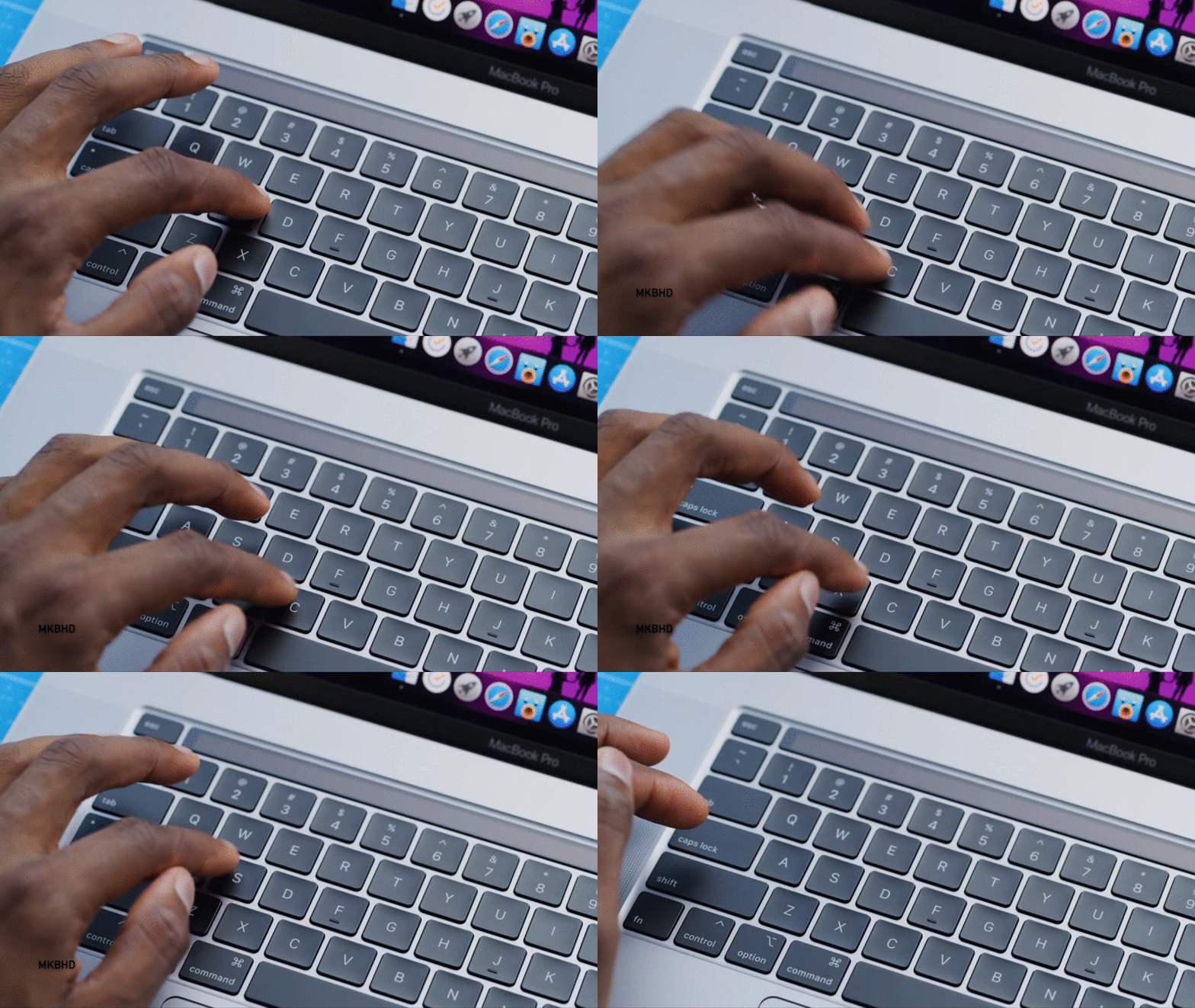
Don’t let any videos fool you or trick you into believing this is something new. It is not. It is actually the same old Scissor Switch Mechanism that we had all grown up with in laptops and love — the clickety-clack and the travel of the key when pressed.
But, there is some Magic…
The updated Magic keyboard has essentially the same Scissor Switch Mechanism but instead of the plastic joints, all the joints are now the glass-reinforced-plastic (or called Glass-filled Nylon). This will make the traditional age-old design more durable and will last longer.
My thoughts
I honestly feel this entire keyboard debacle was simply born out of
not understanding the customer.
It is imperative for designers and design-based organisations to listen and understand what the customer needs are when they introduce something new. And more so, when the customers are complaining about it.
Apple has always been an industry transformer in many ways. They’ve frequently pioneered some changes in the industry and changed the entire landscape. Steve Jobs started with removing the CD Drive on the MacBooks, and then Apple removed the USB-C. In the iPhones, the headphone jack was removed. These are some examples to name a few. You can also see that these were actually great ideas simply by observing how many brands followed suit.
But, in the long history of Apple always trying new things, this is a good lesson in design for us all to understand how much we can push innovations. Many Apple products have bombed in the market too— the iPhone 5c, the Apple HomePod, and Apple Maps to name a few.
But, hey, they tried something new and Apple has been brave enough to accept their mistake and changed it to something people love! — Now, this is what is Magic for me.
Instead of trying to keep pushing us to use Apple Maps forever! — hopefully soon they’ll change something there too.
—
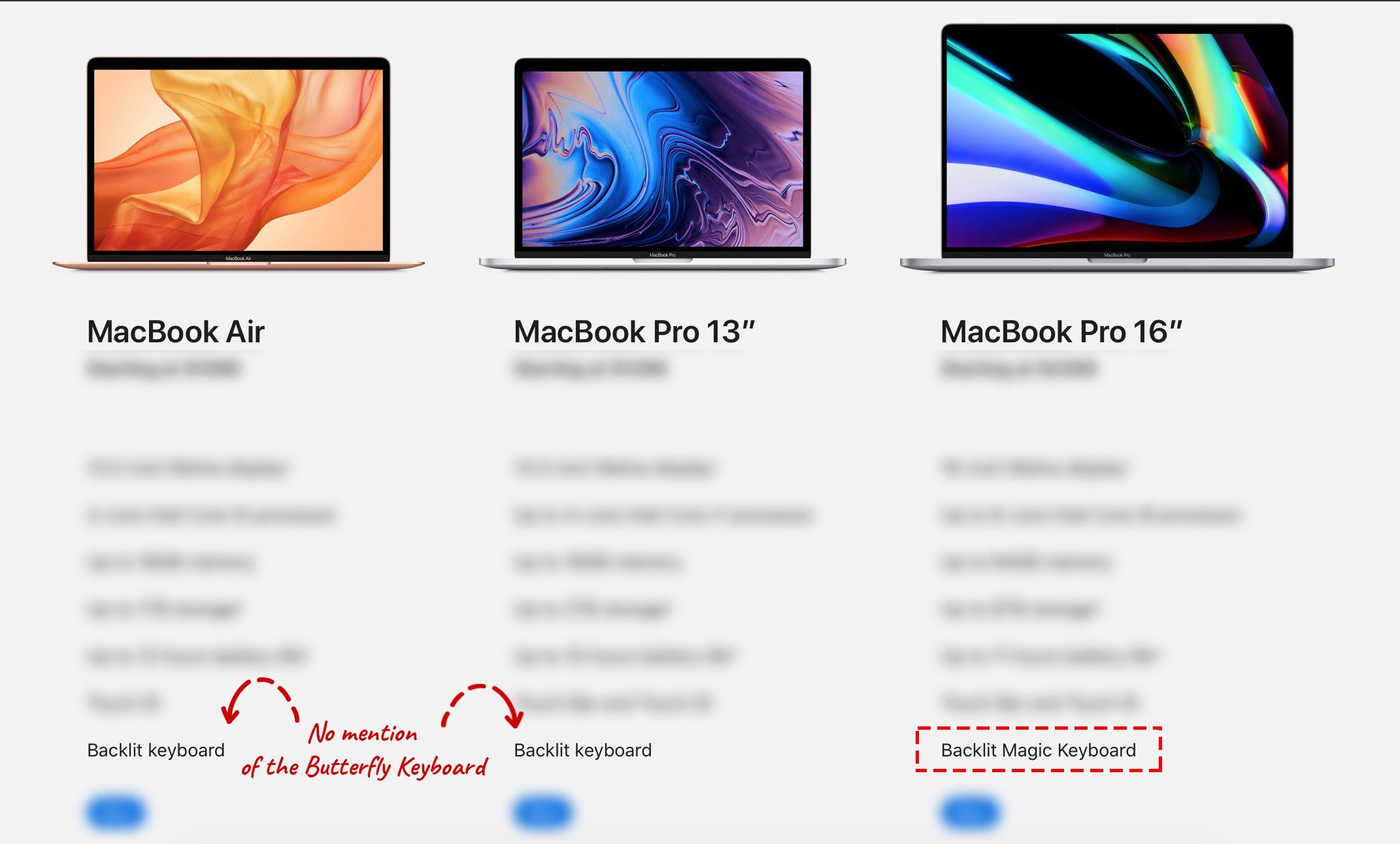
Also, fun fact: Apple doesn’t even talk about the Butterfly Keyboard on the Mac landing page now…
What do you think of Apple’s new Magic keyboard?
All Rights Reserved for Dheeraj Nanduri
 Productivity Hub