Cover Photo: Photo by Diana ✨ on Pexels.com
You have the magnesium spray. The mouth tape. The sunrise lamp, the blue-light glasses, the sleep score that greets you every morning like a school report. And yet you still wake up at 3 a.m. with your brain replaying an email from last Tuesday, and you still drag yourself through the afternoon on your third coffee.
Welcome to sleepmaxxing, the internet’s favourite wellness obsession of 2026. The idea is appealing: treat sleep like a project, stack enough hacks and gadgets, and you’ll unlock elite energy. Some of it is backed by decades of sleep science. Some of it is expensive theatre. And a few of the most viral tricks can actually make your sleep worse.
This guide separates the three. You’ll learn which habits genuinely move the needle, which trends to skip, how to use a sleep tracker without letting it run your life, and a simple one-week plan you can start tonight. No miracle claims, no supplement stack to buy.
Key takeaways
- The boring basics win. A consistent wake time, morning daylight, a cool dark bedroom and a caffeine cut-off beat almost every gadget.
- Mouth taping has thin evidence and possible risks, especially if you might have undiagnosed sleep apnea.
- Trackers are estimates, not verdicts. Obsessing over sleep scores has its own name: orthosomnia.
- Melatonin is a timing signal, not a sedative. Long-term nightly use deserves a conversation with a doctor.
- Persistent insomnia needs real treatment. CBT-I, not another hack, is the recommended first-line approach.
What “sleepmaxxing” actually means (and why it took off)
Sleepmaxxing borrows the “-maxxing” suffix from internet culture: take one area of life and optimise it relentlessly. On TikTok and YouTube that looks like elaborate night routines, product hauls and screenshots of near-perfect sleep scores.
The motivation behind it is completely reasonable. Sleep affects mood, focus, appetite, immunity and how well you handle stress. The US Centers for Disease Control and Prevention recommends that adults aged 18 to 60 get seven or more hours per night, and plenty of people fall short. Wanting to fix that is smart.
The problem is the method. Social feeds reward what looks impressive on camera, and a new gadget is more clickable than “go to bed at the same time.” So the trend tilts toward the novel and the purchasable, while the unglamorous habits that do most of the work get buried.
The best sleep routine isn’t the one with the most steps. It’s the one you can repeat on a Tuesday when you’re tired, busy and not filming anything.
The four habits that do most of the heavy lifting
If you only change four things, change these. They’re free, they’re backed by mainstream sleep medicine, and they work together.
1. Anchor your wake-up time
Your body clock (circadian rhythm) calibrates mainly around when you get up and see light, not when you fall asleep. Pick a wake time you can keep seven days a week, within about an hour, and protect it even after a bad night. Sleeping in until 11 on Saturday is the “social jet lag” that makes Sunday night so hard.
Pro tip: set the wake time first, then count back seven and a half to eight and a half hours to find your target bedtime. If you aren’t sleepy at that bedtime, don’t force it; get up at the same time anyway and the sleepiness will shift earlier over a week or two.
2. Get daylight in the first hour
Bright morning light is one of the strongest signals your clock receives. Outdoor light, even on a cloudy winter day, is far brighter than typical indoor lighting. Ten to twenty minutes outside, a walk to get coffee, or breakfast next to a big window all count. Sunglasses off if it’s safe and comfortable.

3. Make the bedroom cool, dark and boring
Most people sleep better in a slightly cool room, with blackout curtains or an eye mask and minimal noise. “Boring” matters too: if the bed is where you scroll, answer messages and watch shows, your brain learns that bed means alertness. Keep it for sleep and intimacy where you can.
4. Set a caffeine cut-off
Caffeine lingers for hours. In a 2013 study in the Journal of Clinical Sleep Medicine, a large dose taken six hours before bed still measurably reduced sleep. A practical rule: no caffeine after early afternoon, and earlier if you’re sensitive. Remember that tea, cola, energy drinks, pre-workout powders and dark chocolate count too.
Viral sleep hacks, rated honestly
Here’s how the most popular sleepmaxxing tactics stack up. “Evidence” here means the quality of research in ordinary healthy adults, not whether it works for one influencer.
| Trend | Evidence | Verdict |
|---|---|---|
| Consistent wake time | Strong | Do it. The foundation of everything else. |
| Morning daylight | Strong | Do it. Free and fast. |
| Cool, dark room / eye mask | Good | Do it. Cheap wins. |
| Mouth taping | Weak, with possible risks | Skip unless a clinician advises otherwise. |
| Nightly melatonin | Useful for specific timing issues | Short-term, targeted use; ask a doctor about long-term use. |
| Magnesium drinks and sprays | Limited and mixed | Optional. Don’t expect a dramatic effect. |
| “Sleepy girl mocktail” | Little direct evidence | Fine as a calming ritual, not as medicine. |
| Chasing a perfect sleep score | Can backfire | Look at trends, not single nights. |
Mouth taping: the hack worth skipping
Mouth taping, putting a strip of tape over your lips so you breathe through your nose, is probably the most viral sleepmaxxing trick. Supporters claim it improves sleep quality, reduces snoring and even sharpens your jawline.
The research doesn’t back the hype. A 2025 systematic review in PLOS One looked at the available studies and found little reliable evidence of benefit, while flagging potential harms. The biggest concern: some people who mouth-breathe at night do so because their nasal airway is blocked or because they have obstructive sleep apnea. Taping the mouth shut can mask the symptom while leaving the cause untreated.
What to do instead: if you snore loudly, wake up gasping, or a partner notices pauses in your breathing, talk to a doctor about a sleep evaluation. If you simply feel congested at night, ask a pharmacist or doctor about the cause, whether that’s allergies, a cold or something structural.
Melatonin and the supplement shelf
Melatonin is a hormone your body releases in the evening as light fades. As a supplement it’s best understood as a timing signal rather than a knockout pill. That’s why it’s mainly used for things like jet lag or a body clock that runs very late, rather than general “I can’t switch off” insomnia.
Rules differ by country: in the US it’s sold over the counter as a dietary supplement, while in the UK and many European countries it’s generally prescription-only. Over-the-counter products can also vary in how much melatonin they actually contain.
In late 2025, a large observational analysis presented at the American Heart Association’s Scientific Sessions found that adults with insomnia who used melatonin long term had a higher rate of heart failure diagnoses. It was an early, preliminary study that shows an association, not proof that melatonin causes heart problems. But it’s a good reminder that “natural” doesn’t mean “free of trade-offs”, and that months of nightly use is worth discussing with a doctor.
The same caution applies to magnesium blends, herbal teas and trendy powders. Some people find them pleasant and calming, which is fine. Just don’t let a supplement stand in for the habits above, and check with a pharmacist if you take other medications, are pregnant, or have a health condition.
How to use a sleep tracker without losing sleep over it
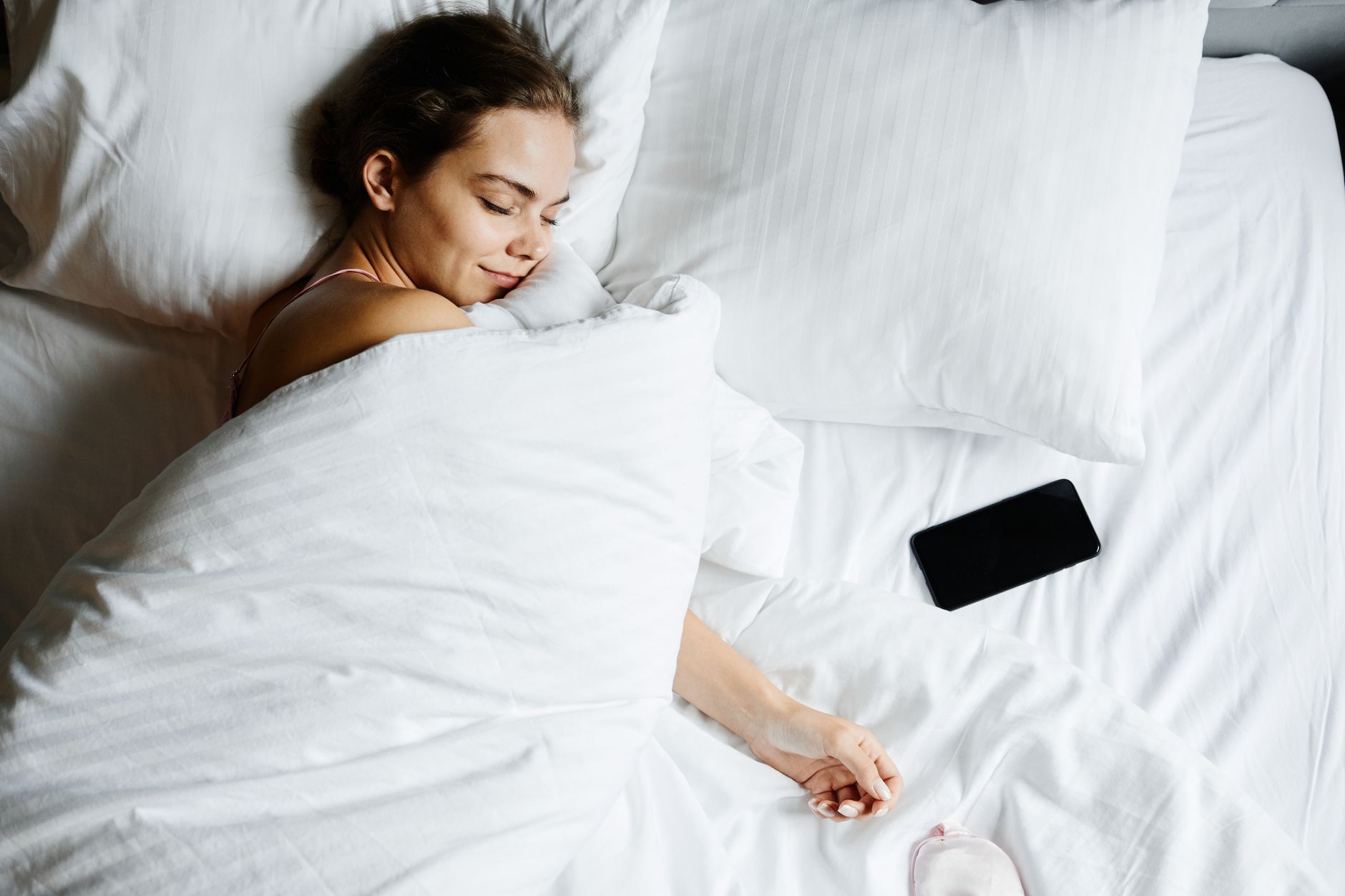
Rings, watches and under-mattress pads can be genuinely useful. They’re reasonably good at showing patterns such as when you tend to fall asleep, how consistent your schedule is, and whether late meals or alcohol line up with worse nights. They’re much less precise at the detailed sleep-stage breakdowns they display so confidently, because they estimate stages from movement and heart signals rather than measuring brain activity the way a sleep lab does.
Sleep researchers even coined a term for the downside: orthosomnia, a preoccupation with perfect tracker data that can itself increase anxiety and make sleep worse. If you’ve ever felt tired because your app told you that you slept badly, you’ve had a taste of it.
A healthier tracker routine
- Check weekly averages, not nightly scores. One bad night is noise. A two-week trend is information.
- Track one experiment at a time. For example: “No caffeine after 1 p.m. for 14 days.” Then compare.
- Trust how you feel. If you wake refreshed and function well, a mediocre score doesn’t override that.
- Hide the score for a week if you notice dread or frustration when opening the app.
- Never use tracker data to self-diagnose. Bring concerns, and the data, to a clinician.
Your wind-down routine, minus the 14 steps
You don’t need a 90-minute ritual. You need a short, repeatable buffer between “on” and “off.” Here’s a version that fits a real evening.
- 60 minutes before bed: dim the main lights and switch to lamps. Finish heavy work and difficult conversations.
- 45 minutes before: do a two-minute brain dump. Write tomorrow’s top three tasks and any worries on paper, so your head doesn’t have to hold them. (Our guide on switching off from work has more on this.)
- 30 minutes before: phone on the charger outside the bedroom, or at least across the room. Use a cheap alarm clock if the phone is your alarm.
- 20 minutes before: something low-stakes: a paper book, a warm shower, light stretching, a familiar podcast at low volume.
- In bed: if you’re still wide awake after roughly 20 minutes, get up, do something calm in dim light, and return when you feel sleepy.
That last step sounds counterintuitive, but it’s a core part of the techniques sleep specialists use. Lying in bed frustrated teaches your brain to associate the bed with being awake.
Pitfalls that quietly wreck sleep
- The weekend lie-in spiral. Two extra hours on Saturday and Sunday shifts your clock and makes Monday miserable.
- The “nightcap.” Alcohol can make you drowsy, but it tends to fragment sleep later in the night.
- Revenge bedtime procrastination. Staying up late to claw back “me time” after a packed day. The fix is to schedule that free time earlier, not to steal it from sleep.
- Late, intense work sessions. If your best focus hours are in the morning, protect them so you aren’t cramming at 11 p.m. Our piece on scheduling work around your energy shows how.
- Long late-afternoon naps. If you nap, keep it short and earlier in the day.
- Optimising in secret while ignoring symptoms. Loud snoring, gasping, or months of insomnia deserve medical attention, not another gadget.
When it’s more than a habit problem
If you regularly struggle to fall or stay asleep, at least a few nights a week for several months, and it affects your days, that may be chronic insomnia. The recommended first-line treatment for most adults is cognitive behavioural therapy for insomnia (CBT-I), a structured programme that tackles the thoughts and behaviours keeping you awake. It’s available through clinicians and, in many places, through digital programmes recommended by health services.
See a doctor too if you notice loud snoring with pauses in breathing, extreme daytime sleepiness, restless or uncomfortable legs at night, or if sleep problems come with low mood or anxiety. This article is general information, not medical advice.
Action plan: your one-week sleep reset
Try this tonight
- Choose a fixed wake time and set an alarm for it, including the weekend.
- Move your phone charger out of reach of the bed.
- Write a three-line brain dump before you turn off the light.
Try this week
- Get 10 to 20 minutes of daylight within an hour of waking every day.
- Set a caffeine cut-off and stick to it for seven days.
- Make the room darker: blackout curtains, an eye mask, or tape over glowing standby lights.
- If you use a tracker, look only at the seven-day average on day seven.
- Pause any hack you can’t explain the purpose of, mouth tape included.
Sleep reset checklist
- ☐ Same wake time 7 days in a row
- ☐ Morning light on at least 5 of 7 days
- ☐ Caffeine cut-off respected
- ☐ Phone out of reach at night
- ☐ Bedroom cool, dark and quiet
- ☐ Any red-flag symptoms booked in with a doctor
FAQ
Is sleepmaxxing bad for you?
Not inherently. Prioritising sleep is healthy. It becomes a problem when it turns into anxiety about perfect data, expensive products replace basic habits, or risky trends like mouth taping hide symptoms that need medical attention.
Does mouth taping help you sleep better?
Current research doesn’t show a reliable benefit for most people, and reviewers have raised safety concerns, particularly for people with blocked noses or undiagnosed sleep apnea. Speak to a doctor about snoring or mouth-breathing instead.
How many hours of sleep do adults really need?
Public health guidance from the CDC is seven or more hours per night for adults aged 18 to 60. Individual needs vary a little, so how you feel and function during the day is a useful check.
Are sleep trackers accurate?
They’re useful for spotting patterns in timing and duration, but their sleep-stage estimates are less precise than a sleep lab. Use them for trends over weeks, not judgments about a single night.
Is it safe to take melatonin every night?
Melatonin is mainly helpful for body-clock timing issues like jet lag. Because long-term effects are still being studied, and one recent observational study raised questions about heart health, talk to a doctor or pharmacist before using it nightly for months.
What is the fastest way to fix a messed-up sleep schedule?
Fix your wake time first, get bright light soon after waking, and avoid long lie-ins and late naps. Most people notice their bedtime naturally drifting earlier within one to two weeks.
This article is for general information and isn’t a substitute for professional medical advice. If sleep problems persist or affect your daily life, please speak to a qualified healthcare professional.



Leave a Reply